Board of Directors
None of the board members has been, or currently is, a member of the Executive Committee of medmix Ltd or any of its subsidiaries. In addition, no significant business relationships exist between members of the Board of Directors and medmix Ltd or subsidiaries of medmix Ltd.
For detailed information on transactions with related parties, please see note 30 to the consolidated financial statements.
Members of the Board of Directors
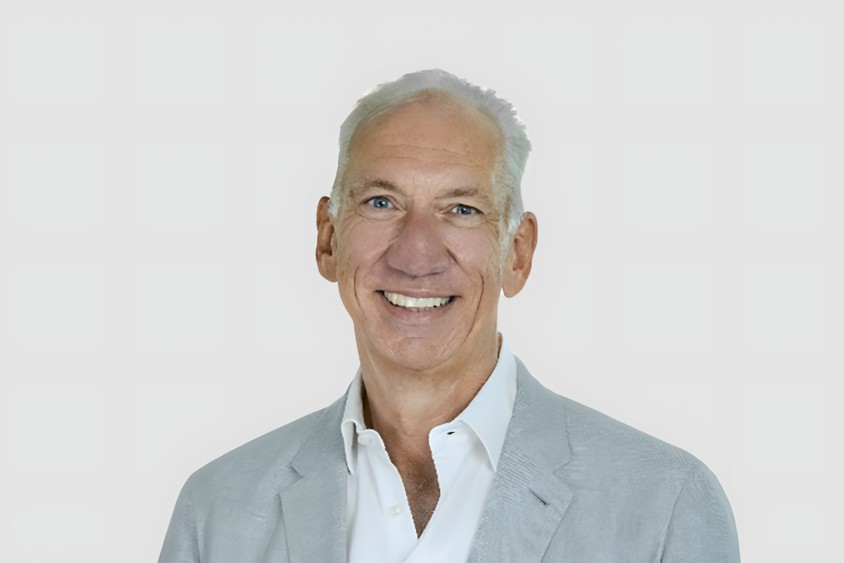
Rob ten Hoedt, Chairman of the Board of Directors and Chairman of the Nomination and Remuneration Committee, is a Dutch citizen born in 1960.
Binding interests: Member of the Board of Directors of Fagron International since 2019, Chairman of the Supervisory Board of NLC Health since 2020, Chairman of the Board of Onward Medical since 2024, Chairman of the Board of Berlin Heals Holdings since 2025, and member of the Board of Salvia BioElectronics since 2025.
Rob ten Hoedt was until August 2024 the Executive Vice President & President, Global Regions of Medtronic, which encompasses the global commercial organization of EMEA, Asia-Pacific, USA, Canada and Latin America, only excluding China, and a member of Medtronic’s Executive Committee. He was Chairman of the Board of MedTech Europe (the association representing the medical technology industry in Europe) from 2014 to December 2022. From 2014, he was Executive Vice President & President Europe, Middle East & Africa (EMEA), to which Asia-Pacific (APAC) was added in May 2022. He has previously held various business and regional leadership positions since joining Medtronic in 1991. Prior to Medtronic, Rob worked in several medical technology companies including Arjo Hospital Equipment and Polystan Benelux, and he also ran his own medical equipment distribution company.
Rob graduated with a degree in Commercial Economy from the H.E.A.O., the Netherlands, and holds a Master’s in Marketing from the NIMA Business School.
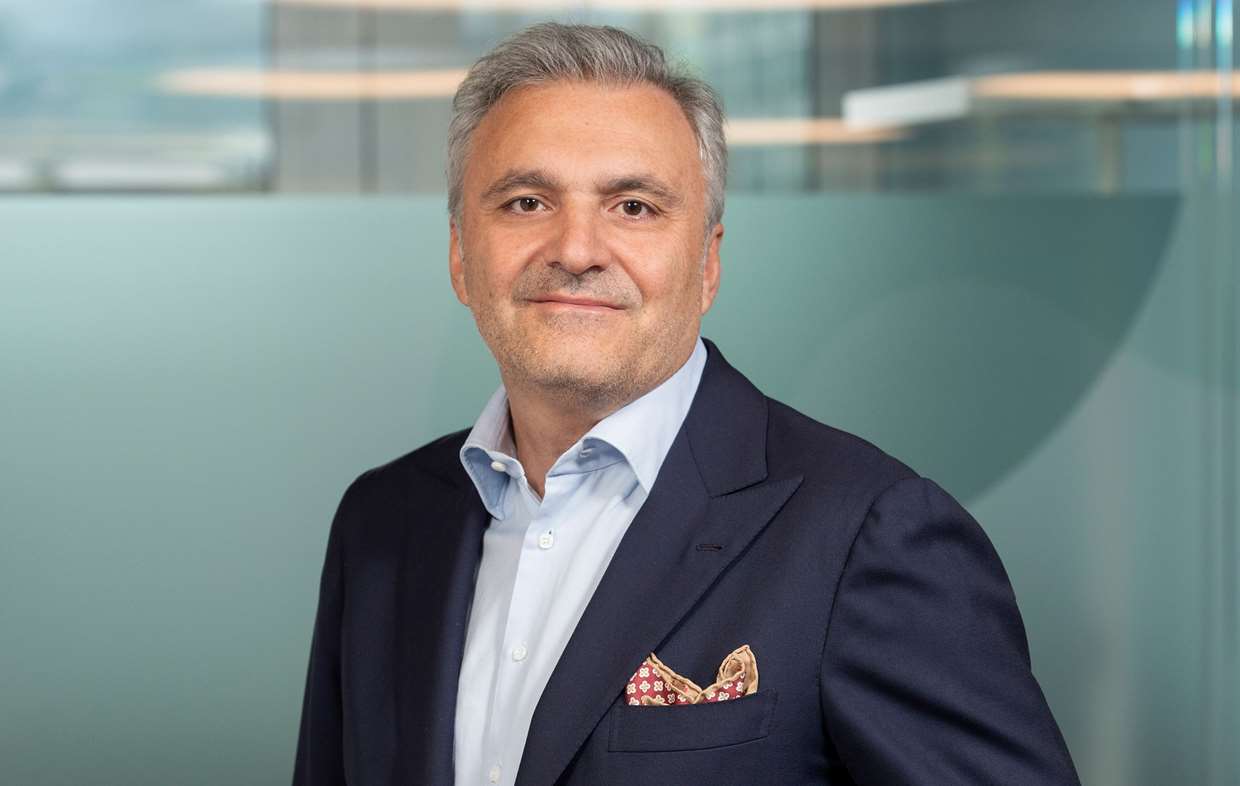
Marco Musetti, Vice Chairman of the Board of Directors and Chairman of the Audit Committee, is a Swiss and Italian citizen born in 1969.
Binding interests: Member of the Board of Directors of Oerlikon since April 2025, member of the Board of Directors of Octo Telematics since 2017; President of the Board of Directors of GEM Capital Ltd since 2018; member of the Board of Directors of UMK since 2014; member of the Board of Kalahari Minerals Marketing Ltd since 2021.
Marco Musetti was a member of the Board of Directors of Sulzer Ltd from 2011 to April 2021, a member of the Board of Directors of Schmolz+Bickenbach AG (today Swiss Steel Holding AG) (2013–2019), a member of the Board of Directors of United Company Rusal Plc (today United Company RUSAL, international public joint-stock company) (2016–2023), and a member of the Board of Directors of Kalahari Trading Ltd (2017–2021). Previously, he was COO and deputy CEO of Aluminum Silicon Marketing (Sual Group) (2000–2007), Head of Metals and Structured Finance Desk for Banque Cantonale Vaudoise (1998–2000), and Deputy Head of Metals Desk for Banque Bruxelles Lambert (1992–1998).
Marco Musetti holds a Master of Science in Accounting and Finance from the London School of Economics and Political Science, UK, and a Major degree in Economics from the University of Lausanne, Switzerland.
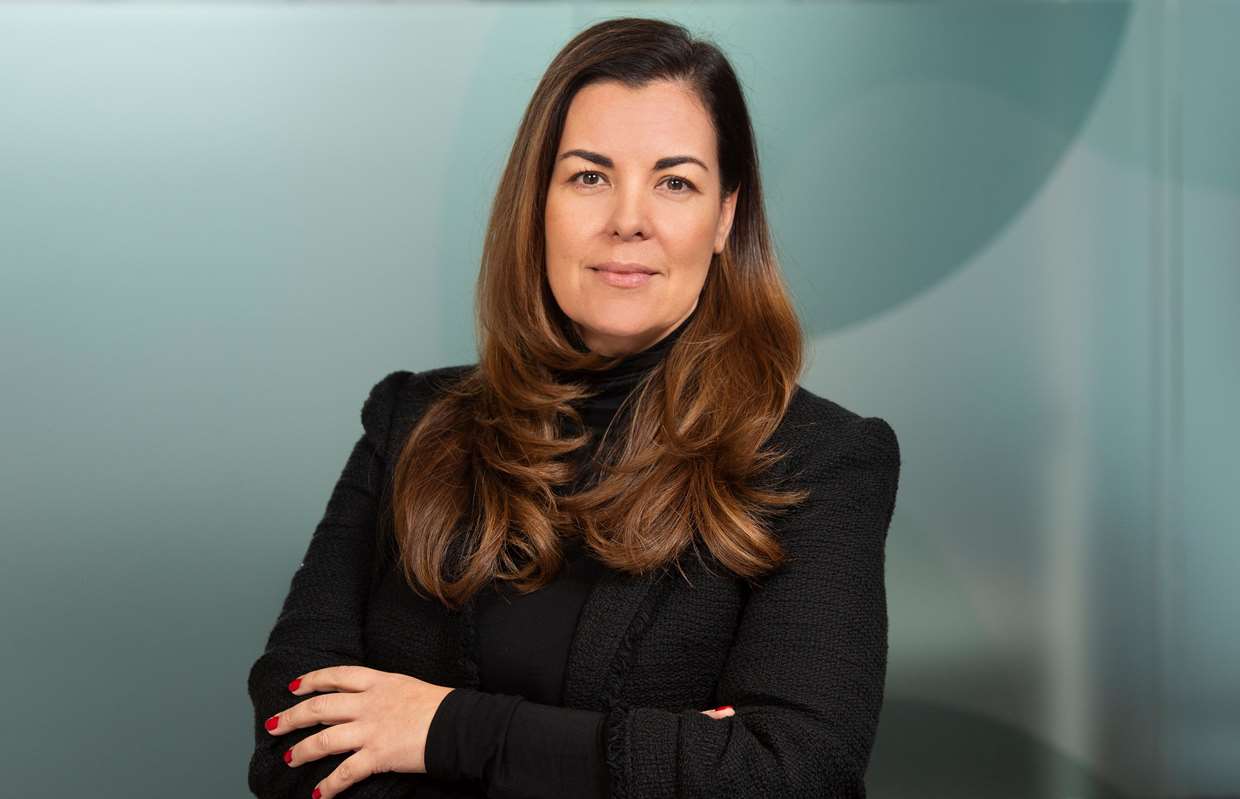
Barbara Angehrn, member of the Board of Directors and member of the Nomination and Remuneration Committee, is a Swiss and Serbian citizen born in 1974.
Binding interests: Chief Executive Officer of Numab Therapeutics AG since September 2025, Non-Executive Director of Bellevue Group since March 2023 and owner and managing officer of STEPSTONE Pharma GmbH since January 2015.
Barbara Angehrn has been Chief Executive Officer of Numab Therapeutics AG since 2025, a biotechnology company advancing multi-specific antibodies in immunology and oncology. Previously, she served as Chief Executive Officer of Asceneuron, a clinical-stage neurodegeneration company (2022–2025). Prior to her role at Asceneuron, she spent over four years (2018–2022) as a Member of the Executive Committee (EVP) and Chief Business/Marketing Officer at Vifor Pharma Group (acquired in August 2022 by CSL). During her time as an executive at Vifor, Barbara had various responsibilities ranging from global commercial, Vifor's nephrology portfolio and managing operations such as manufacturing, IT, IR, corporate communications, etc. Before joining Vifor Pharma, Barbara served as the Chief Executive Officer and founder of STEPSTONE Pharma from January 2015 to November 2018. She was also Vice President Europe at Exelixis from February 2014 to January 2015 and Head of Commercial EMEA at Onyx Pharmaceuticals from 2012 to 2014. Prior to these roles, Barbara spent more than ten years at Amgen in various leadership positions.
Barbara Angehrn holds a Master’s degree in Finance and Capital Markets from the University of St. Gallen in Switzerland.
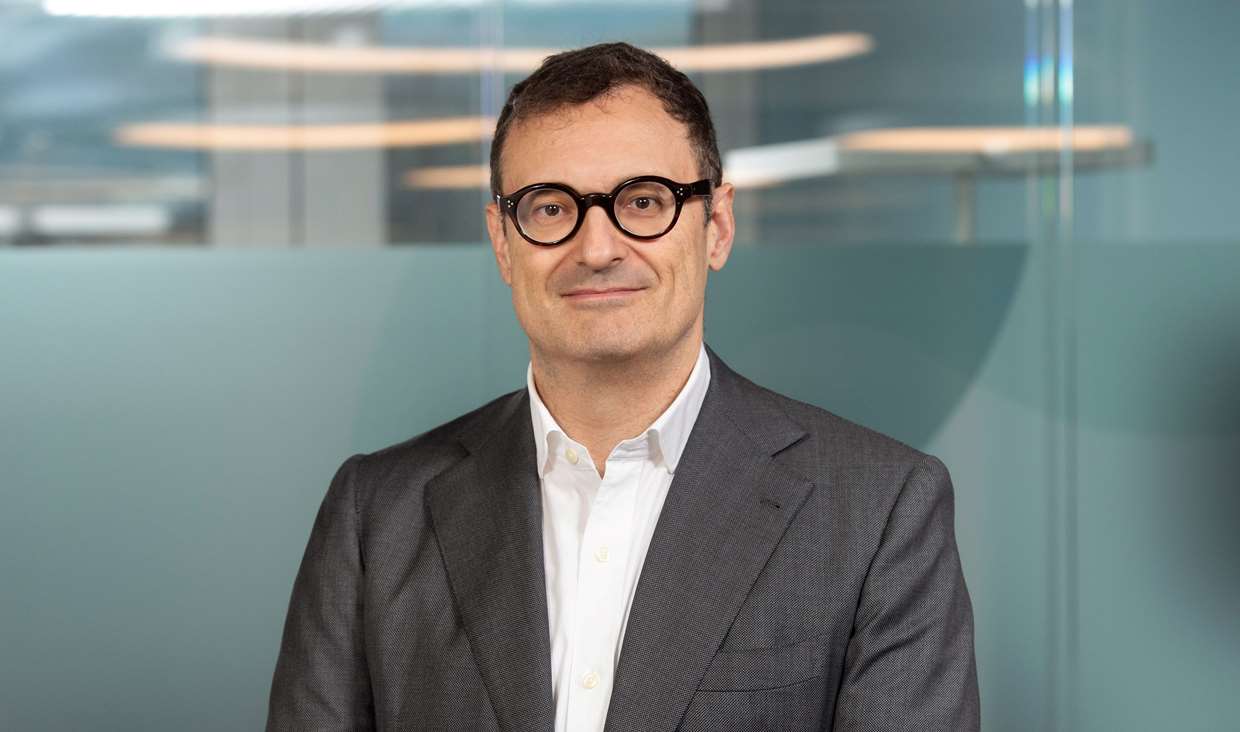
David Metzger, member of the Board of Directors and member of the Nomination and Remuneration Committee, is a Swiss and French citizen born in 1969.
Binding interests: Binding interests: Member of the Board of Directors of Sulzer Ltd since 2021.
David Metzger is a seasoned investment professional with extensive experience in investment management, mergers and acquisitions, and portfolio strategy. Since late 2025, he has served as Investment and Portfolio Manager at A2 Link AG. His previous roles include investment director at Liwet Holdings AG (2015–2025) and Good Energies AG (now Bregal Energy, part of COFRA Holding; 2007 to 2011) and senior manager at Bain & Company (2000 to 2007). He has also held positions at Novartis and Morgan Stanley. David has a strong track record in corporate governance, having served on the boards of directors of several prominent companies, including Swiss Steel Holding AG (2020–2025, delisted in 2025), OC Oerlikon (2016–2021, listed), Octo Telematics SpA (Italy, 2014–2023) and Norsun (Norway, 2008–2009).
David holds a Master’s degree in Finance from the University of Zurich and an MBA from INSEAD.
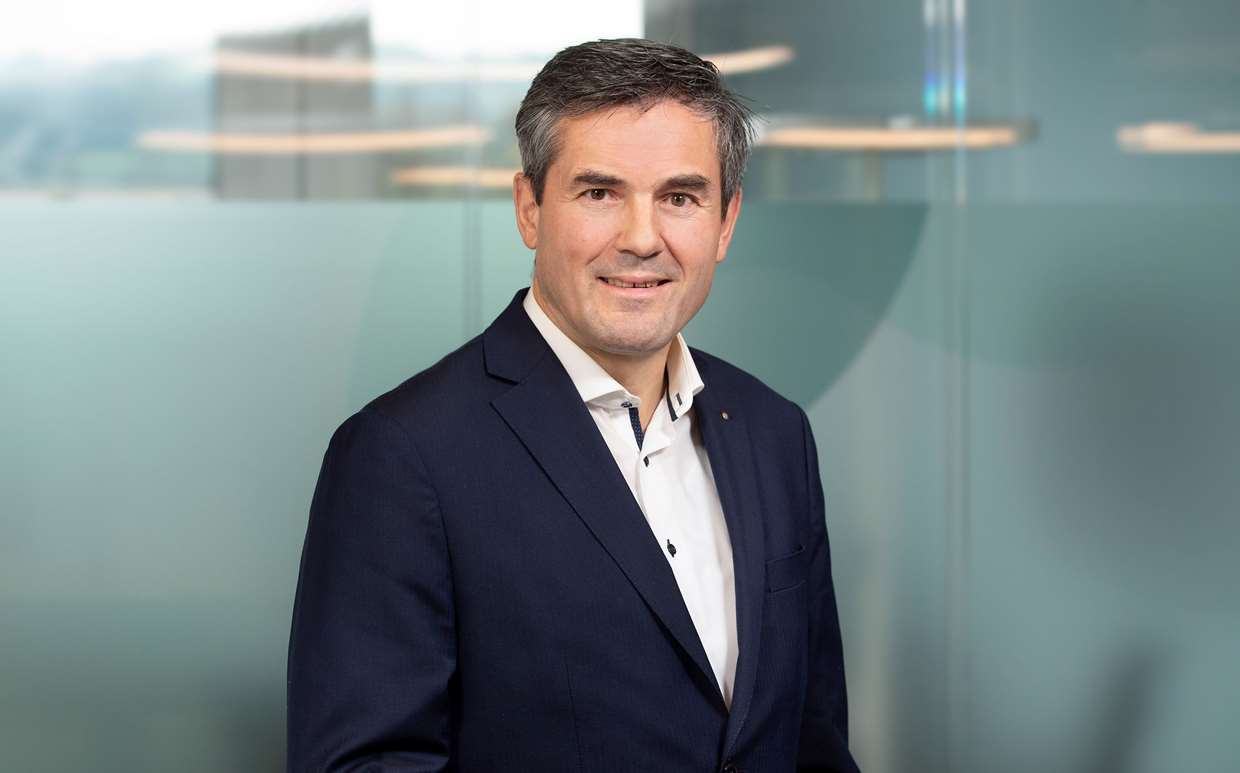
Daniel Flammer, member of the Board of Directors and member of the Audit Committee, is a Swiss citizen born in 1969.
Binding interests: Member of Board of Directors of AdvisReal AG since 2018 and AR Professional Services AG since 2021, Chairman of the Board of Directors of Tiwel Holding AG since 2019, member of the Board of Directors of altrimo treuhand group AG since 2020 and Chairman of the Board of Directors of Bridle Holding AG from 2024 until 2025.
Daniel Flammer is the Managing Partner of AR Financial Advisory AG in Zurich since April 2018, where he provides transaction advisory services, tax advisory and CFO services to several corporate and private equity clients in various industries. Previously, he was a partner in Audit & Advisory at Deloitte AG Zurich (2004 to 2018), a firm he joined in 1998 after starting his career with Hess Revisions- und Wirtschaftsberatungs AG & Hess Grant Thornton AG, ALFA Treuhand- und Revisions AG and Communal Administration of Niederburen in St. Gallen.
Daniel qualified as a certified public accountant in 1997 and previously graduated from the University of Applied Sciences for Business HWV St. Gallen (Betriebsökonom HWV/FHSG). He was certified as an International Director at INSEAD in 2018.
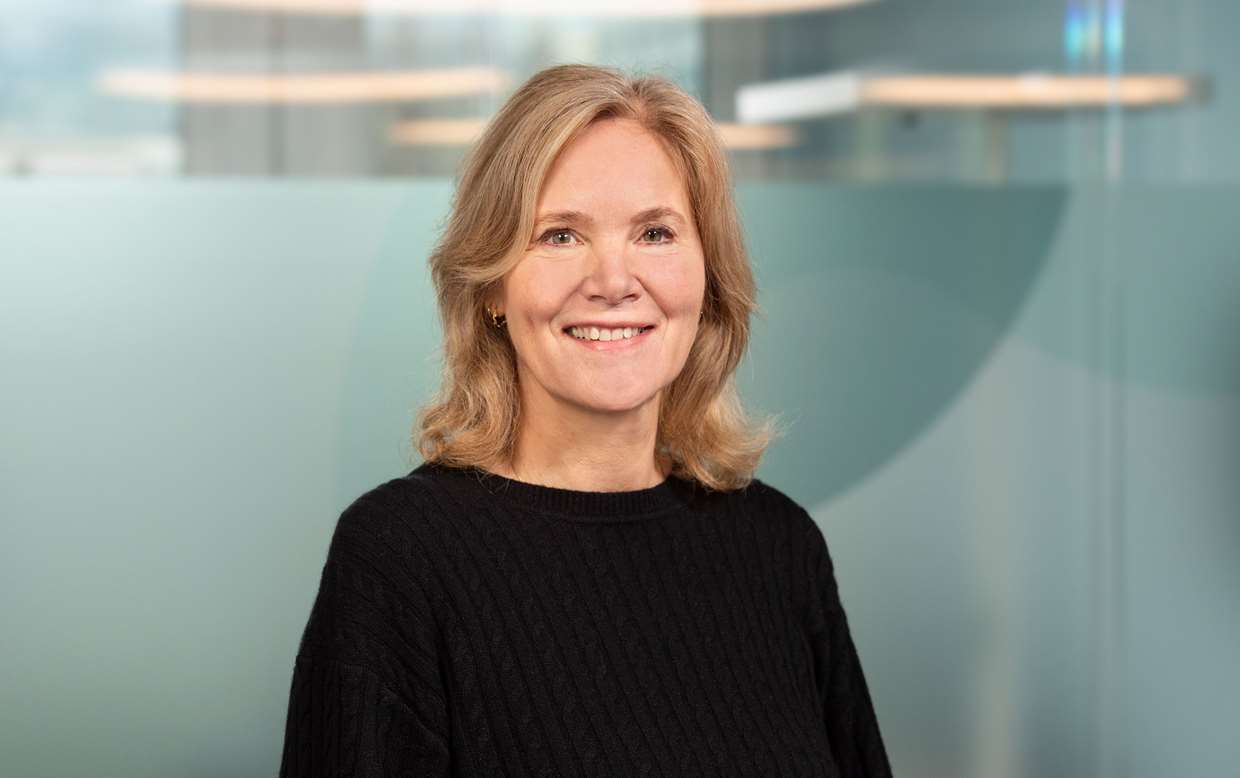
Susanne Hundsbaek-Pedersen, member of the Board of Directors and member of the Audit Committee, is a Danish citizen born in 1967.
Binding interest: Since 2020, she has acted as Senior Advisor for DAA Capital Partners in Geneva, Switzerland.
Since January 2021 Susanne Hundsbaek-Pedersen has been Executive Vice President, Head of Global Technical Operations at F. Hofmann-La Roche Ltd in Basel. In this role, she is responsible for all technical development, manufacturing, supply chain, quality, and regulatory activities within the Pharma division of Roche. She joined Roche from Novo Nordisk A/S in Denmark (2002–2020) where she was successively Senior Project Manager, Category Manager then Director of Strategic Sourcing, Corporate Vice President, Product Supply Finance and IT, Senior Vice President Devices, Senior Vice President Supply Chain Management and Senior Vice President Product Supply (Global Manufacturing) Diabetes Products. She started her career at United Parcel Service of America, Olicom A/S, and Intel Corp.
Susanne Hundsbaek-Pedersen graduated with a Diploma in Industrial Engineering from the Technical University of Copenhagen and an Executive MBA from the IMD Business School in Lausanne, Switzerland.
There have not been any changes to the Board of Directors in the reporting year. Details of former members of the Board are provided in the Corporate Governance section of the annual reports for the financial year 2024 and previous financial years, available at medmix.swiss/investors/financial-reports (under Downloads).
Number of permitted activities
According to Art. 33 of medmix’ Articles of Association (at medmix.swiss/en/Investors/Governance; under Downloads), the maximum number of additional mandates held by members of the Board of Directors outside the medmix group is ten, of which a maximum of four mandates may be with listed companies. Exceptions (e.g., for mandates held at the request of medmix) are also defined in Art. 33 of the Articles of Association. All members of the Board of Directors comply with these requirements, and no exceptions were granted in the reporting period.
Elections and terms of office
Art. 18 of the Articles of Association (at medmix.swiss/en/Investors/Governance; under Downloads) stipulates that the Board of Directors of medmix Ltd shall comprise three to seven members. Each member is elected individually. The term for members of the Board of Directors is one year until the next AGM, but re-election is possible. At the AGM of April 23, 2025, all six Board members were re-elected for terms of one year. Rob ten Hoedt was re-elected as Chairman of the Board of Directors. The nationalities represented on the Board of Directors are as follows: one from Switzerland, one from Switzerland/Serbia, one from the Netherlands, one from Switzerland/France, one from Switzerland/Italy and one from Denmark. Professional expertise and international experience played a key role in the selection of the members of the Board of Directors.
According to Art. 4 of the Organizational Regulations of the Board of Directors (at medmix.swiss/en/Investors/Governance; under Downloads), the term of office of a board member ends no later than on the date of the AGM in the year when the member reaches the age of 70. The Board of Directors can make exceptions up to but not exceeding the year in which the member reaches the age of 73.
At the AGM of April 23, 2025, Proxy Voting Services GmbH was re-elected as the independent proxy of medmix Ltd for a term of office extending until completion of the next AGM.
Internal organizational structure
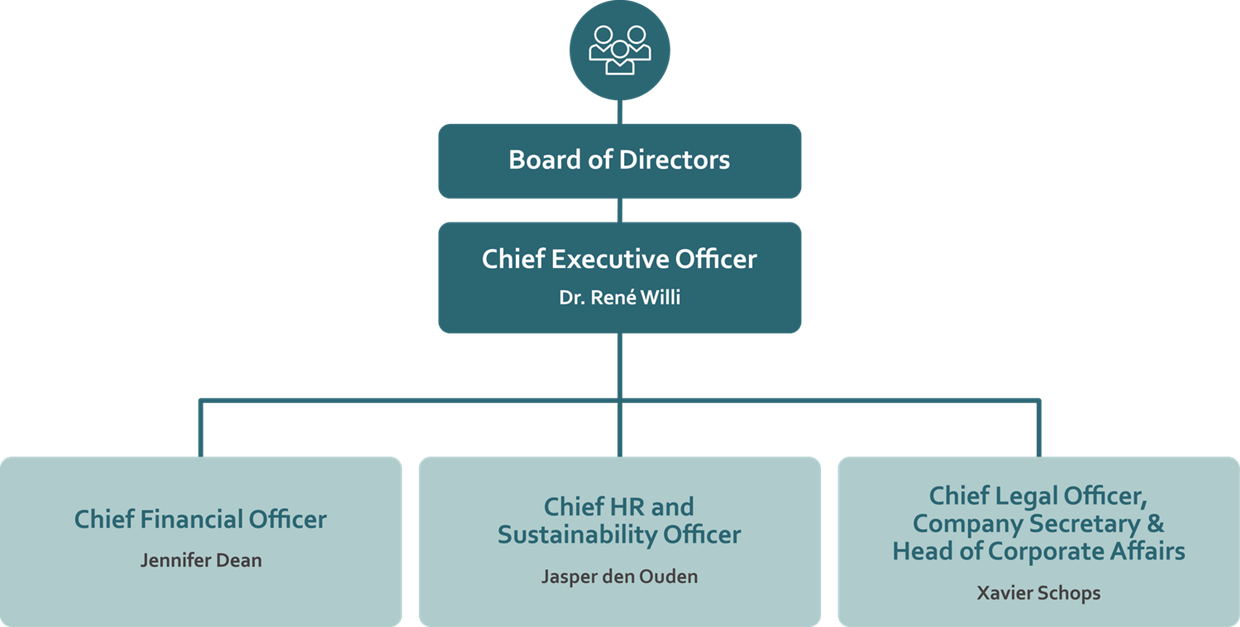
The Board of Directors constitutes itself, except for the Chairman of the Board of Directors who is elected by the Shareholders’ Meeting. The Board of Directors appoints from among its members the Vice-Chairman of the Board of Directors and the members of the Board Committees, except for the members of the Nomination and Remuneration Committee, who are elected by the Shareholders’ Meeting. In addition, the Board of Directors appoints a secretary, who does not need to be a member of the Board.
There are currently two standing board committees (for their constitutions, see below):
- the Audit Committee, and
- the Nomination and Remuneration Committee.
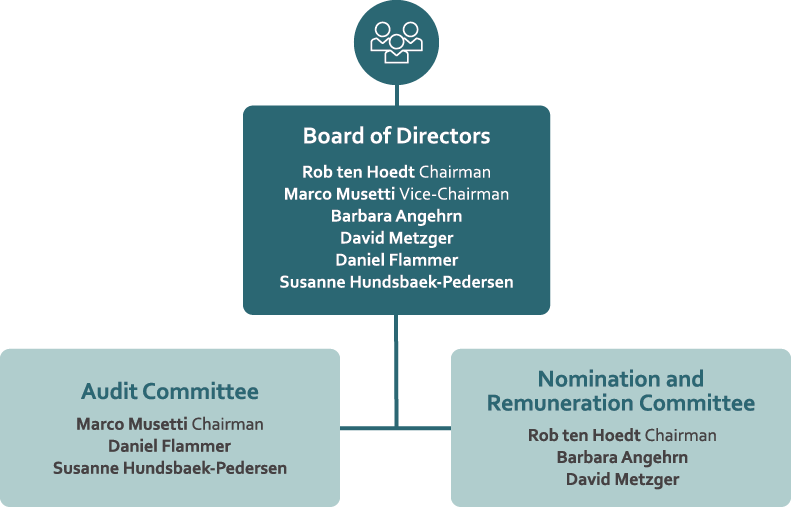
The Organizational Regulations of the Board of Directors and the relevant Committee Regulations, which are published at medmix.swiss/en/Investors/Governance (under Downloads), define the division of responsibilities between the Board of Directors and the CEO. They also define the authorities and responsibilities of the Chairman of the Board of Directors and of the two standing Board Committees.
For each resolution to be taken by the Board of Directors, written documentation is distributed to the members of the Board of Directors ahead of each meeting. The Board of Directors and the committees meet as often as required by the circumstances. The Board of Directors meets at least five times per year (typically in February, April, July, October and December for ordinary meetings); the Audit Committee and the Nomination and Remuneration Committee meet at least twice annually. The Board of Directors shall be deemed quorate if at least half of its members are present and if the majority of the members present are not representatives of a shareholder subject to sanctions pursuant to Article 18 of the Articles of Association (at medmix.swiss/en/Investors/Governance; under Downloads). Resolutions of the Board of Directors are passed upon the majority of votes cast. In the event of a tie, the chairman of the meeting shall have the casting vote.
In 2025, the Board held five ordinary meetings in person, lasting on average 6 hours 25 minutes, and three extraordinary meetings, two of which were held via video conference, lasting on average 50 minutes, and one meeting of which was held via circular resolution. The Nomination and Remuneration Committee held four meetings in 2025, lasting an average of 1 hour 15 minutes, and the Audit Committee also held four meetings, lasting an average of 1 hour 20 minutes. For further details, see the table below. The CEO, CFO, CHRO and CLO generally attend the Board of Directors’ meetings in an advisory role, the Chief Legal Officer also serving as secretary of the Board of Directors. Members of the extended Executive Team and other selected executives are invited to attend Board of Directors’ meetings as required to provide their specific input, for instance on mid-term planning, the strategy, the budget, market segment-specific items, investments and acquisitions, sustainability or compliance.
The committees do not make any decisions, but rather review and discuss the matters assigned to them and submit the required proposals to the Board of Directors for decision. At the next meeting of the Board of Directors following the committee meeting, the chairpersons of the committees report to the Board of Directors on all matters discussed, including key findings, opinions and recommendations.
Members of the Board | Attending meetings of the | |||||||||||||
Name | Nationality | Position | Entry | Elected until | Board | AC | NRC | |||||||
Rob ten Hoedt | Dutch | Chairman of the Board1) | April 2022 | 2026 | 8 | |||||||||
Chairman NRC2) | 4 | |||||||||||||
Marco Musetti | Swiss/Italian | Vice-Chairman of the Board3) | September 2021 | 2026 | 8 | |||||||||
Chairman AC4) | 4 | |||||||||||||
Barbara Angehrn | Swiss/Serbian | Member NRC5) | April 2022 | 2026 | 8 | 4 | ||||||||
Susanne Hundsbaek-Pedersen | Danish | Member AC6) | April 2024 | 2026 | 7 | 3 | ||||||||
David Metzger | Swiss/French | Member NRC7) | April 2022 | 2026 | 7 | 4 | ||||||||
Daniel Flammer | Swiss | Member AC8) | April 2022 | 2026 | 8 | 4 | ||||||||
AC = Audit Committee, NRC = Nomination and Remuneration Committee | ||||||||||||||
1)Since April 28, 2023.
2)Since April 12, 2022.
3)Since September 20, 2021.
4)Since April 12, 2022.
5)Since April 12, 2022.
6)Since April 24, 2024
7)Since April 28, 2023.
8)Since April 12, 2022.
Audit Committee
The Audit Committee (members listed above) assesses the half-year and full-year consolidated financial statements and, in particular, the activities – including the effectiveness and independence – of the internal and statutory auditor and the cooperation between the two bodies. It also assesses the internal control system and risk management, and compliance. The Regulations of the Audit Committee can be viewed at medmix.swiss/en/Investors/Governance (under Downloads). The CFO, the secretary of the Board of Directors, the Deputy CFO (who is also the secretary of the Audit Committee) and the external auditor-in-charge attend the meetings of the Audit Committee.
In 2025, the Audit Committee held four meetings. The statutory auditor attended all the meetings, and internal subject matter experts gave presentations to the Audit Committee during the meetings.
Nomination and Remuneration Committee
The Nomination and Remuneration Committee assesses the compensation systems and recommends compensation for the members of the Board of Directors and the Executive Committee (including short-term and long-term incentive components) to the Board of Directors in accordance with its specifications. It carries out broad compensation benchmarking with an international comparison group, supported by studies by consulting firms, if necessary, and scrutinizes the work of internal and external consultants. The Nomination and Remuneration Committee also deals with nomination matters and assesses the criteria for the election and re-election of Board of Directors’ members and the nomination of candidates for the Executive Committee. It is furthermore responsible for succession planning for the CEO and the Executive Committee and for the periodic assessment of the membership structure of the Board of Directors. The members of the Nomination and Remuneration Committee are elected at the Shareholders’ Meeting. The Nomination and Remuneration Committee Regulations are available at medmix.swiss/en/Investors/Governance (under Downloads). The CEO and the Chief Human Resources Officer (CHRO) attend the meetings of the Nomination and Remuneration Committee.
In 2025, the Nomination and Remuneration Committee held four meetings.
Definition of areas of responsibility
The Board of Directors has largely delegated executive management powers to the CEO. However, it is still responsible for matters that cannot be delegated in accordance with Art. 716a of the Swiss Code of Obligations. These matters include corporate strategy, the approval of mid-term planning and the annual budget, and key personnel decisions. The same applies to acquisition and divestiture decisions exceeding CHF 20 million, investments in fixed assets exceeding CHF 10 million, major corporate restructurings, approval of dispute settlements with an EBIT or cash impacts exceeding CHF 5 million, approval of research and development projects exceeding CHF 5 million, other matters relevant to the company, and decisions that must by law be made by the Board of Directors. The competency regulations and the nature of the collaboration between the Board of Directors and the Executive Committee can be viewed in the Organizational Regulations of the Board of Directors at medmix.swiss/en/Investors/Governance (under Downloads).
Information and control instruments
Each member of the Board of Directors receives a copy of the monthly financial information, the half-year report and the full-year financial statements. These include information about the balance sheet and the income and cash flow statements, as well as key figures for the company and its segments. They incorporate comments on the respective business results and a rolling forecast for the current business year. The CEO, supported by the CFO, reports at every Board of Directors’ meeting on financial performance, business development and initiatives for each segment, together with key organic and inorganic projects and all matters relevant to the company. Updates regarding employees, sustainability and compliance are given. Once per year, the Board receives the forecast for annual results. During these Board of Directors’ meetings, the chairpersons of the committees also report on all matters discussed by their committees, and on the key findings and assessments, and they submit proposals as required. Each year, the Board of Directors discusses and approves the budget for the following year and the mid-term plan; the latter being subject to periodic review. The Board also reviews the strategy for the company. The Chairman of the Board of Directors regularly consults with the CEO and other representatives of the Executive Committee with respect to strategic matters and focus areas. In addition, the Board of Directors receives a status update on investor relations and legal and compliance matters on a regular basis, and each member of the Board of Directors may request information regarding all matters relating to the group’s business.
Group Internal Audit
The objective of Group Internal Audit is to provide independent objective assurance and other services to help ensure that the medmix group operates in accordance with the management, internal controls and governance processes, which are adequate for the achievement of business objectives. Group Internal Audit is approved to provide assurance services to both medmix and external stakeholders such as external auditors. Meetings between internal audit and the statutory auditor take place on an annual basis, to discuss the internal audit organization and approach.
Group companies are audited by Group Internal Audit based on an audit plan that is approved by the Audit Committee. Special audit assignments may be performed at the request of a member of the Board of Directors, the Executive Committee or the management of the relevant group company, with prior approval from the chairperson of the Audit Committee.
In 2025, Group Internal Audit carried out seven audit assignments. Five audit assignments included follow-up reviews to verify the implementation of recommendations from previous audits. One of the focal points was the internal control system and compliance with the company’s governance structure.
The results of each audit and key remediation measures are discussed in detail and agreed upon with the relevant group companies, and also shared with members of the Executive Committee. The Chairman of the Board of Directors, members of the Audit Committee, CEO, CFO, Deputy CFO, COO, CLO , CCO and relevant line managers of the audited group company receive a copy of the audit report. Significant findings and recommendations are also presented to and discussed with the Executive Committee. A follow-up process is in place for all internal audits, which allows for efficient and effective monitoring of how the improvement measures are being implemented.
Group Internal Audit prepares a summary of audit activities and results, along with the status of implementation of improvement measures. On a quarterly basis, the Head of Internal Audit presents the summary to the Audit Committee, in the presence of the external auditor-in-charge, and it is subsequently reported to the Board of Directors.
Risk management and compliance
medmix operates a comprehensive compliance program supported by specialized, dedicated IT systems for training and awareness campaigns, a whistleblower hotline and case management, third-party screening and due diligence. The compliance structure includes a Chief Compliance Officer (CCO) and two regional compliance heads for Asia and the US, working under the guidance of the CCO for their compliance tasks, while formally reporting to the Chief Legal Officer. The CCO is responsible for the global compliance program and all corporate compliance activities, while regional compliance functions focus on managing local initiatives tailored to meeting specific jurisdictional requirements.
Governance oversight is ensured through regular reporting of material compliance matters and significant developments to the Audit Committee, as well as through at least one annual update to the Board of Directors. In 2025, the results of the enterprise risk review were presented and assessed during the Audit Committee meeting in October. In December, the CCO provided a comprehensive update to the Board of Directors, including key data from the compliance hotline, material developments and regulatory changes.
medmix’ compliance program is built around the three principles of prevention, detection, and response.
Prevention: medmix has implemented a range of preventive measures, with the Code of Business Conduct (published at medmix.swiss/en/Investors/Governance) serving as the foundation of these efforts. A dedicated compliance hotline, managed by an independent third-party provider, enables anonymous reporting both internally and externally. Compliance training is delivered globally through a centralized training and campaign platform, with completion rates tracked and reported to senior management and the Audit Committee. Additionally, thorough third-party due diligence is conducted during onboarding, with ongoing monitoring and regular re-assessments based on risk levels.
Detection: medmix employs tools to identify potential compliance risks and misconduct, including a whistleblower system, internal audit reviews and compliance controls. Internal audit findings are shared with senior management, with key observations presented to the Audit Committee by the Head of Audit.
Response: medmix’ compliance framework incorporates continuous improvement mechanisms, including monitoring, audits and investigations to address and rectify any process weaknesses or control deficiencies. Disciplinary measures are implemented as necessary to uphold compliance standards and mitigate risks. The framework is regularly reviewed, evaluated and, if necessary, adapted.
The internal control system, supplemented by policies and directives, including the Code of Business Conduct (published at medmix.swiss/en/Investors/Governance), covers a range of compliance topics and addresses risks associated with competition, bribery and corruption, trade and export controls, insider trading and privacy and data protection.
The whistleblower hotline, managed by a specialized third-party company, allows employees and third parties to report any concerns anonymously. Once a report is submitted, the CCO is automatically notified and conducts a triage to determine appropriate actions, such as initiating a formal investigation or addressing the issue through other means. Key findings and outcomes are shared with senior management, as appropriate.
medmix conducts an annual Enterprise Risk Management (ERM) process, led by the CCO and involving dedicated risk champions from across the business units and functions. This process takes a holistic view of risks and opportunities across the organization. Rooted in failure mode and effects analysis (FMEA) methodology for detailed risk analysis and guided by ISO 31000 methodologies, the ERM process categorizes, prioritizes and assesses risks based on their potential financial, operational, legal, reputational and social impact. All risks and their ratings are tracked in a central risk registry. For risks rated as moderate, significant or critical, a risk treatment strategy is defined. Strategies may include avoiding the risk, removing its source, mitigating its impact, transferring the risk or accepting it. Progress on risk treatment actions is reviewed by the CCO in collaboration with the risk owners and risk champions. The CCO provides regular updates on significant risks and developments to the Audit Committee. The comprehensive results of the ERM process are presented annually to the Audit Committee meeting, ensuring strategic alignment and oversight.
medmix has identified 14 sustainability material topics, including climate change, data protection, consumer safety and business integrity. These topics address environmental, social, and governance (ESG) risks and reinforce medmix’ commitment to responsible and sustainable business practices. Further details can be found in the Sustainability report.
As part of the focus on continuous improvement, medmix conducts annual internal reviews of its compliance program. The review for 2025 confirmed that the program meets key functional requirements and its overall maturity has further advanced. Objectives for 2026 have been set to further develop the compliance program, in line with emerging compliance and regulatory needs, ensuring that medmix maintains a proactive and adaptable compliance framework.
Risk | Rationale | Mitigation activities | ||
Business interruption | ||||
Sites disrupted or unable to operate. Leads to economic impact, contractual risk and reputation risk | 1. Unable to operate site 2. Delay in equipment commissioning | 1. Global manufacturing footprint (limit single site risk) 2. BCP and crisis management system 3. Business risk insurance 4. Monitor climate change impact | ||
Supply chain disruption | ||||
Unable to source (energy, raw material, transportation, or equipment) on time and in the required quantity | Inability to source on time/as needed impacts growth and sales plans | 1.Global procurement and diversification of supply chain (avoid single source), supplier quality assurance program 2. Regional inventory and logistics models 3. Global monitoring of supply chain risks | ||
Export & trade restrictions | ||||
Non-compliance with regulations/sanctions, new regulations or developments limiting international trade, denied export | Geopolitical developments, unable to continue shipping, liability, increased costs, reputation | 1. Monitor geopolitical developments and regulatory space & trends 2. Leverage production footprint and digital solutions | ||
Product regulations | ||||
medmix portfolio becoming partly unfit due to changes to regulations on products and increased regulatory complexity | 1. Enaction of laws restricting the use of disposable products; material bans and taxation 2. Expanded product and service offerings | 1. Monitor regulations and trends (quality or regulatory) 2. Assess customers` evolving demand and the fitness of the portfolio 3. Assess alternatives in product R&D 4. Continuous optimization of QMS framework to address regulatory complexity | ||
Intellectual property | ||||
medmix unable to defend its technology and patent portfolio, and commercialize its new products | Unable to sell or price our products | 1. Fiercely defend IPR 2. Thorough IP clearance study before product introduction 3. Scanning of competitors/copier products 4. Strong IP protection of product portfolio, improvements and brands | ||
Compliance | ||||
Non-compliant or unethical behavior leading to contract breach, reputational damage, fines and (criminal) liability | 1. Regulated industry, complexity of applicable laws 2. Non-compliance: existing or acquired companies (bribery,corruption, sanctions & KYC) | 1. Active fostering of high ethical standards by tone from the top and middle management 2. Monitoring and assessment of potential exposure 3. Code of Business Conduct and supporting internal regulations (e.g., anticorruption, antitrust, trade control) 4. Third-party due diligence process 5. Compliance training (including e-learning), audits, compliance hotline | ||
IT security (cyber) | ||||
Cyber risk and access to systems | Cyber risk and restricted or no access to network, data and systems due to cybercrime (hack, malware) | 1. 24/7 network & endpoint service provider monitor 2. Internal IR security resource, software updates, defined backup & recovery priorities 3. Governance frameworks to address emerging risks 4. Cybersecurity insurance | ||
Finance | ||||
Unable to secure financing for growth due to a) size of medmix b) age of medmix c) economic conditions | Unable to invest in acquisitions, technological evolution, infrastructure | 1. Promote medmix to investors and finance community 2. Proactively identify source of funds | ||
ESG & Sustainability | ||||
Exposure to ESG and sustainability risks from climate-related disruptions, evolving regulations and disclosure demands, supply chain vulnerabilities, and sustainability commitments | Growing regulatory and disclosure expectations, climate-related and supply chain pressures, and increasing stakeholder focus on ESG performance | 1. Dedicated ESG leadership and governance 2. Cross-functional alignment on ESG risk assessment and response 3. Increaesd use of recycled materials in products |