Approach and progress
Materiality assessment
The assessment identified and assessed the potential environmental, social, employee-related, human rights and combatting corruption topics that could affect the company’s business performance. It was performed considering the reporting requirements of the Swiss Code of Obligations and the reporting standard of the Global Reporting Initiative (GRI).
During 2025, medmix reviewed the double materiality assessment (DMA) completed during the previous year, aligned with the Exposure Drafts of the simplified European Reporting Standards (ESRS), adding an additional financial perspective and further risks and opportunities from Enterprise Risk Management (ERM).
The following steps were taken during the initial assessment process:
Step | Method | |
1. Material topics selection | The set of 38 topics, covering impacts, risks and opportunities across our value chain, was created based on the historical list and on competitive analysis. In addition to the requirements of the Global Reporting Initiative (GRI), the Sustainable Development Goals (SDGs) were also considered. | |
2. Establish external context | The expectations of external stakeholders were determined by analyzing regulatory trends and legislative proposals, as well as the activities of competitors, media coverage and results from ratings organizations. | |
3. Stakeholder engagement | To analyze the importance and impact on medmix’ business success, a questionnaire was sent to a representative group of medmix employees across the five business units and the different business functions. | |
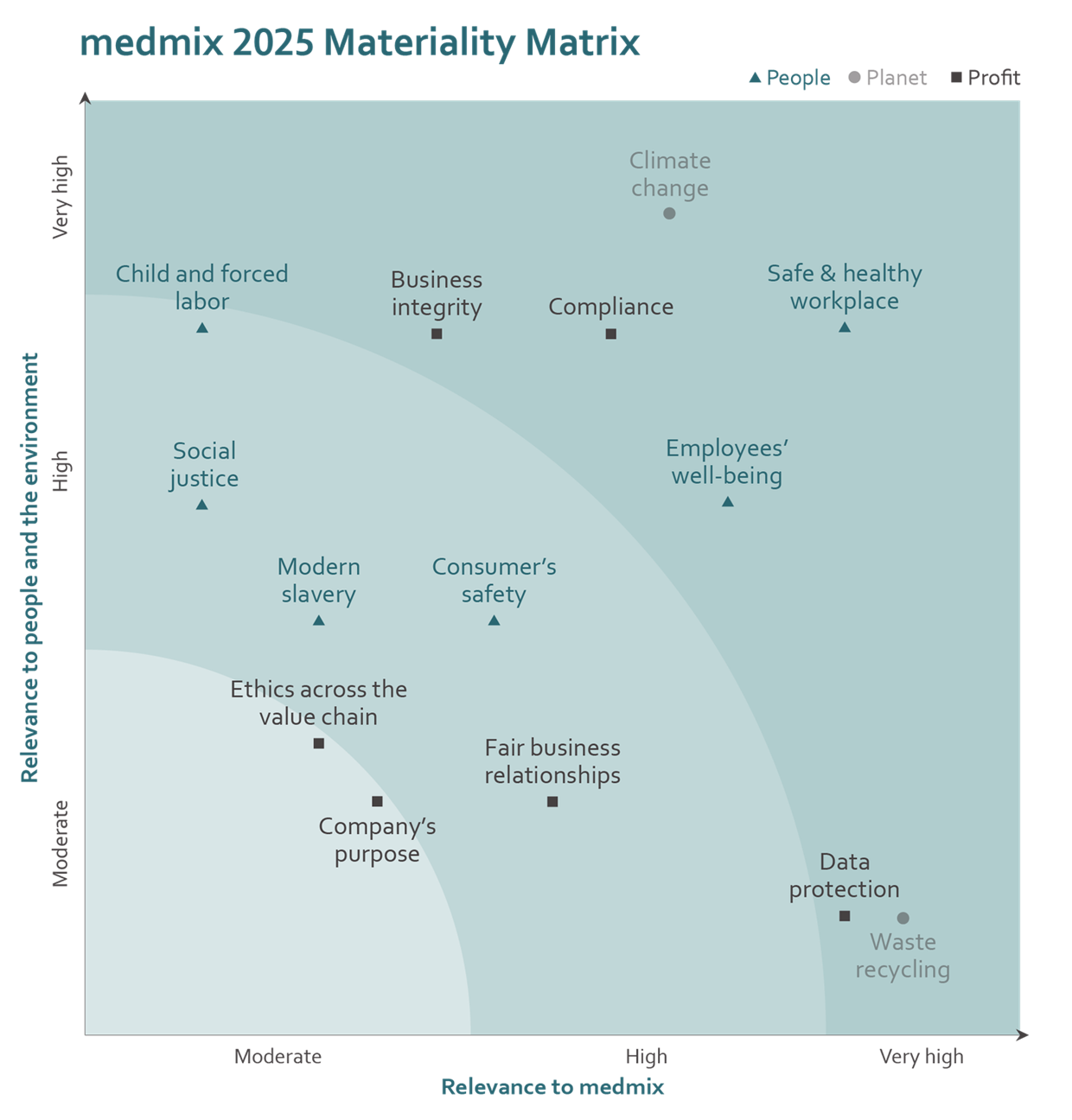
4. Materiality assessment | The quantitative and qualitative input received from the above stakeholders was assessed and plotted on a matrix reflecting the topic’s relevance to medmix and to people and the environment. | |
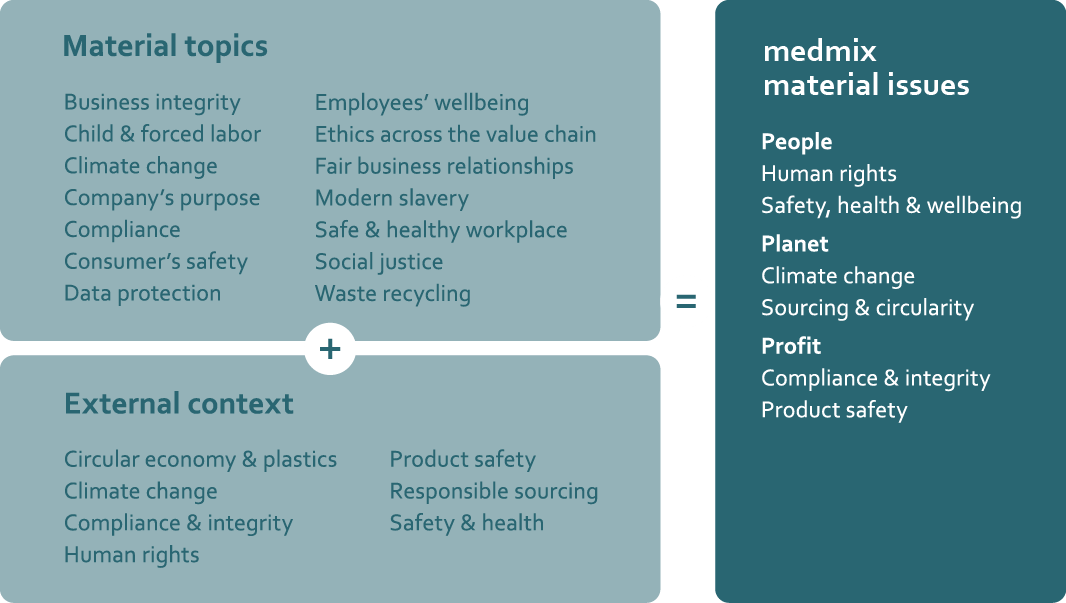
5. Apply financial materiality | The 14 topics assessed as being most relevant were then referenced with the risks and opportunities identified and managed through the Enterprise Risk Management process, with an additional financial materiality perspective being integrated. The resulting material topics were then grouped to form the medmix material issues, allowing simplification without losing the necessary details. | |
6. Review strategies | medmix’ established priorities and actions were reviewed and updated where necessary. |
The following materiality matrix shows the relevance of the material topics to medmix and to people and the environment:
As a result of the assessment and material topic grouping, medmix identified six material issues, which are aligned with the business strategies, priorities and actions:
While water was not identified as a material topic, information regarding its related measures, activities and performance is included in this report in anticipation of interest from external parties.
Concepts
This section describes the key medmix regulations, being the concepts and policies, directives and strategies adopted with regards to the five non-financial matters (NFMs) defined in the Swiss Code of Obligations: environment, social, employment, human rights and combatting corruption, and their relationship to the medmix material issues:
Non-financial matter | medmix material issue | Key medmix regulation | ||
Environment | • Climate change • Sourcing & circularity | • Applying and Reporting medmix’ Sustainability Commitments • Business Partner Code of Conduct • Climate Scenario Analysis • Eco-design Principles • Procurement Directive • Sustainability Policy | ||
Social | • Product safety | • Quality Focus | ||
Employment | • Safety, health & wellbeing | • Applying and Reporting medmix’ Sustainability Commitments • Code of Business Conduct • Business Partner Code of Conduct • Personal Data Protection • Sustainability Policy | ||
Human rights | • Human rights | • Code of Business Conduct • Business Partner Code of Conduct • Due diligence in relation to child labor and minerals and metals | ||
Combatting corruption | • Compliance & integrity | • Code of Business Conduct • Business Partner Code of Conduct • Due diligence in relation to child labor and minerals and metals • Information Security • Personal Data Protection • Procurement Directive |
Where a document is publicly available, the link is included in the relevant section.
Applying and reporting medmix’ sustainability commitments
To achieve medmix’ stated objectives, both internal and external sustainability commitments have been established. Their aims are reducing environmental impacts; contributing to society; contributing to cost savings through improved efficiency and waste reduction; increasing attractiveness to customers and investors; enhancing reputation and brand value, thereby increasing customer loyalty; driving innovation and competitiveness through the development of new products and processes that are more responsible; and improving employee engagement by aligning with their values and helping attract and retain talent.
This guideline states the timeframe for compliance with the commitments, defining the thresholds of applicability of specific commitments, and providing guidance on any exceptions. It was developed to address the climate change, safety, health & wellbeing and sourcing & circularity material issues.
Code of Business Conduct
medmix is committed to preventing corruption and has a zero-tolerance policy towards corrupt practices.
The purpose of this code is to provide guidance for business behavior in critical areas relating to the business activities of medmix. The code does not cover every situation where compliance or ethical behavior may be required, but rather sets forth clear expectations and a spirit which are fundamental to the way we conduct our business.
We have established a system for monitoring and reporting corruption and for investigating and addressing corruption-related issues.
The medmix Code of Business Conduct was adopted to address the compliance & integrity, human rights and safety, health & wellbeing material issues.
Business Partner Code of Conduct
We have established a Business Partner Code of Conduct outlining our key ethical and compliance values, including integrity, respect for human rights and adherence to applicable laws and regulations. This code sets clear expectations for third parties with whom we conduct business, ensuring alignment with our standards. All business partners are requested to comply with these principles.
The Business Partner Code of Conduct was adopted to address the climate change, compliance & integrity, human rights, safety, health & wellbeing and sourcing & circularity material issues.
Climate Scenario Analysis
Due to the importance of understanding and preparing for climate-related risks, and in line with the Task Force on Climate-related Financial Disclosures (TCFD) recommendations, we analyzed the physical and transitional climate-related risks across multiple future scenarios to enhance the resilience of our strategies and improve information disclosure.
Our climate scenario analysis assessed the potential impacts of these risks on our operations, financial performance and strategic goals, considering their short-term, medium-term and long-term impacts:
Time horizons | Start year | End year | Explanation for the choice of timeframe | |||
Short-term (0–1 years) | 2025 | 2026 | To assess short-term impacts and immediate actions required to meet near-future regulatory and market demands. | |||
Medium-term (2–7 years) | 2025 | 2030 | To evaluate medium-term strategies and investments needed to align with global climate goals and industry trends. | |||
Long-term (8–30 years) | 2025 | 2050 | To understand long-term sustainability and resilience, ensuring alignment with net-zero targets and future-proofing medmix. |
Our analysis identified several key climate-related risks:
Low scenario (1.5°C) | High scenario (3°C) | |||||||||||
Risk category | Impacts | Severity | Impacts | Severity | Timing of impact | Mitigation | ||||||
Physical | ||||||||||||
Supply chain disruptions | • Minor disruptions due to localized extreme weather events • Slight increase in supply volatility | Medium | • Severe disruptions due to frequent extreme weather events • High volatility in supply chains | High | Medium/ long-term | • Diversify suppliers • Develop local sourcing strategies • Implement robust supply chain risk management | ||||||
Operational disruptions | • Limited impact on facilities • Occasional disruptions in some regions | Low | • Frequent disruptions to manufacturing facilities • Potential long-term closures in high-risk areas | High | Medium/ long-term | • Enhance business continuity plans • Invest in resilient infrastructure • Relocate high-risk facilities | ||||||
Water scarcity | • Moderate water stress in some regions • Need for water efficiency measures | Medium | • Severe water shortages in multiple regions • Significant impact on production processes | High | Medium/ long-term | • Implement water-efficient technologies • Develop alternative production methods • Engage in water stewardship initiatives | ||||||
Temperature changes | • Slight increase in cooling costs • Minor impact on worker productivity | Low | • Substantial increase in cooling costs • Significant decrease in worker productivity due to heat stress | Medium | Long-term | • Improve building insulation • Implement flexible working arrangements • Invest in heat-resistant equipment | ||||||
Transition | ||||||||||||
Regulatory risks | • Stringent carbon pricing mechanisms • Strict product sustainability standards | High | • Less stringent regulations • Focus on adaptation rather than mitigation | Medium | Short/ medium-term | • Monitor regulatory developments • Proactively adopt sustainable practices • Engage in policy discussions | ||||||
Technology shifts | • Rapid adoption of low-carbon technologies • High investment needs for R&D | High | • Gradual adoption of adaptive technologies • Moderate investment in resilience measures | Medium | Short/ medium-term | • Increase R&D budget for sustainable technologies • Form partnerships for innovation • Implement flexible manufacturing processes | ||||||
Market changes | • Strong shift towards sustainable products • New markets for low-carbon solutions | High | • Moderate shift towards climate-resilient products • Increased demand for adaptation solutions | Medium | Medium-term | • Develop sustainable product lines • Conduct market research on climate-resilient products • Diversify product portfolio | ||||||
Reputational risks | • High scrutiny on climate action • Pressure to lead in sustainability | Medium | • Focus on climate resilience • Pressure to support adaptation efforts | Medium | Short/ medium-term | • Enhance sustainability communications • Set and achieve ambitious climate targets • Engage in industry collaboration for climate action | ||||||
In addition to these risks, we identified several climate-related opportunities:
- More efficient production processes and transitioning to lower-emission energy sources.
- Participation in carbon markets, developing new products and services through innovation and diversifying business activities.
- Accessing new markets and improving ratings by sustainability and ESG indices, providing significant competitive advantages.
The climate scenario analysis was completed to address the climate change material issue.
Due diligence in relation to child labor and minerals and metals
In line with the requirement of the Swiss Code of Obligations to undertake due diligence into any reasonable suspicion of child labor within medmix and the supply chain, and in relation to the importation and use of conflict minerals and metals, medmix established internal investigative and assessment processes and performed thorough reviews into these topics.
Having completed the required assessments, no cases of suspected child labor were identified, and medmix does not use any of the listed conflict minerals or metals.
Therefore, medmix is not required to report on due diligence, and any information in this report is provided in anticipation of interest from external parties.
The due diligence processes were established to address the compliance & integrity and human rights material issues.
Eco-design principles
medmix is committed to environmentally sound business practices in our product development. A key component of our strategy is our eco-design approach, enabling the development and launch of sustainable products. The principles are applied consistently across the five business units, and they are the defined reference to create products marketed as eco-designed or sustainable.
These principles are aligned with relevant legislation, ensure greenwashing does not occur and address the climate change and sourcing & circularity material issues.
Information Security
At medmix, data confidentiality, data integrity and system availability are cornerstones of our business. The protection of information and systems is paramount, and therefore we continually monitor adherence to industry standards relating to people, processes, data and technology. Ensuring the security of our customer information is a top priority.
Consistent with industry standards such as the National Institute of Standards and Technology (NIST 2.0) Cybersecurity Framework, the International Organization for Standardization (“ISO/IEC”) 27002 and the Control Objectives for Information and Related Technologies (“COBIT”), medmix’ Information Security Program leverages administrative, technical and physical safeguards to protect the confidentiality, integrity and availability of information.
Such safeguards are designed to:
- Provide for the security and confidentiality of customer, business proprietary and personal information.
- Protect against anticipated threats to the security or integrity of such information.
- Protect against unauthorized access or use of information that could result in material harm to any party.
medmix’ Information Security is aligned to the six NIST 2.0 Cybersecurity Framework Functions: Govern, Identify, Protect, Detect, Respond and Recover. When considered together, these functions provide a high-level, strategic view of the lifecycle of medmix’ management of cybersecurity risk.
medmix employs an in-depth defense strategy with a number of technical controls supported by comprehensive processes designed to detect and prevent unauthorized activity, addressing the compliance & integrity material issue.
Personal Data Protection
At medmix, we prioritize the protection of personal data. Our comprehensive data protection framework is aligned with global data privacy regulations, including the European Union General Data Protection Regulation (EU GDPR).
Our Data Privacy Management System (DMS) contains an appointed Group Data Protection Officer (GDPO) and a network of local Data Protection Officers and deputies across our global sites. These officers and deputies monitor our data protection practices and the compliance with our internal policies and relevant laws and regulations.
We have implemented effective policies and procedures to safeguard personal data. Our Data Privacy Policy stipulates our principles for processing personal data, ensuring personal data protection globally on the same standards for our employees, customers, suppliers and other data subjects.
We seek to process personal data equally across all our group companies. To facilitate this, we have established an Intra-Group Data Transfer Agreement (IGDTA). This agreement ensures that personal data is consistently protected and managed according to our standards, regardless of where it is processed within our organization.
In January 2025, medmix was informed of a data breach at an external service provider, which handles certain employee social insurance data as required by law. Personal data of Swiss-based medmix employees stored at the provider was compromised. No medmix IT systems were affected. medmix promptly notified all impacted employees and provided guidance on protective measures. Together with the provider, medmix has reviewed and reinforced data security arrangements. This incident had no material operational or financial impact on medmix.
Our Personal Data Protection addresses the compliance & integrity material issue.
Procurement Directive
The Procurement Directive describes clear criteria for supplier acceptance: acceptance of our Business Partner Code of Conduct, compliance with the General Data Protection Regulation (GDPR) and with environmental requirements, and no compliance risks (money laundering, bribery and corruption, anti-competitive practices, etc.). After their acceptance, suppliers are included in the Accepted Supplier List and regularly reviewed against these criteria throughout our relationship with them.
Violations of these criteria lead, depending on their severity, to temporary or permanent termination of the relationship with the supplier.
Our Procurement Directive addresses the climate change, compliance & integrity and sourcing & circularity material issues.
Quality Focus
medmix is active in the design, development and manufacturing of sophisticated components and finished products for the Healthcare and Consumer & Industrial segments, mostly within the business-to-business (B2B) framework but also as the legal manufacturer of selected products (applicator systems as medical devices and dispensers as machinery) in selected countries. For the Healthcare segment, medmix is also active as a service provider of specific services such as the filling of dental material and contract manufacturing of combination products.
Product safety and usability, customer satisfaction, superior product quality and a modern, resilient infrastructure – underpinned by well-defined processes – are the core drivers and objectives of our certified medmix Quality Management Systems. These principles are enshrined in the medmix Quality Policy, established as organizational targets and systematically monitored through KPIs across all levels of the organization.
This focus addresses the product safety material issue.
Sustainability Policy
Sustainability is engrained in our corporate strategy and embedded in daily business – with the necessary management frameworks, systems and processes.
Our policy defines the three-tiered approach of People, Planet and Profit, and outlines our commitment to environmentally and socially responsible practices to reduce environmental impacts, enhance the company’s reputation, ensure regulatory compliance, foster innovation and efficiency, and mitigate risk.
The medmix Sustainability Policy considers the material issues of climate change, human rights, safety, health & wellbeing and sourcing & circularity.
Measures adopted
Aligned with the medmix sustainability strategy, the climate-related transition plan (a summary can be found in the Annex) and the identified material issues, our approach includes the following measures and commitments, demonstrating how we act to achieve the Sustainable Development Goals (SDGs).
The main milestones are being satisfactorily met, and the assessment of effectiveness and performance can be found in the Key activities and Main performance indicators sections of this report.
People

- We perform due diligence throughout medmix and our immediate supply chain to identify any cases of reasonable suspicion of child labor and maintain systems to address the risks of forced labor and modern slavery.
Any case of reasonable suspicion of child labor will be investigated and acted upon. - The health and safety of our employees is paramount, and so we identify and address the risks that could cause harm. Our site management teams engage with their teams to continually improve working conditions.
All manufacturing sites are to be ISO 45001-certified by 2025.
Continually improve the employee Lost Time Injury Frequency rate by eliminating hazards and mitigating risks. - We celebrate our diverse global teams and promote their empowerment and inclusion to take advantage of the range of experiences and spirit that sets our company apart. We are signatories to the United Nations Women’s Empowerment Principles and ensure that all employees are treated fairly, respectfully and equally.
Promote inclusion, with an initial focus on diversity.
Virtual learning and training opportunities will be offered to all employees.
medmix benchmarks to living wages1 and will ensure any gaps from evolving standards of living are closed by 2030.
1) The wage level necessary to afford a decent standard of living for workers and their families, taking into account country circumstances and calculated for work performed during normal hours (International Labour Organization (ILO) definition).
Planet
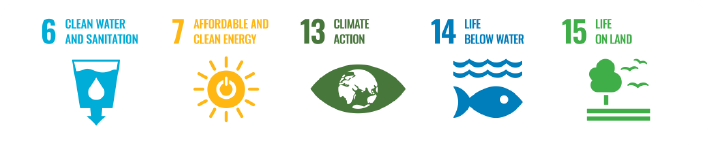
- Our science-based approach to net zero is intended to mitigate the emissions from our own operations and the most impactful and actionable sections of our value chain. We consider the various scenarios when determining our impacts, risks and opportunities across the natural environment and the surrounding communities.
During 2025, medmix’ GHG emission reduction targets were validated by Science Based Targets initiative (SBTi) Services, as meeting the goal of the Paris Agreement to limit global warming to 1.5°C above preindustrial levels.
30% reduction in medmix-own absolute GHG emissions by 2025 from a 2019 base year.
Reduce absolute Scope 1 and 2 GHG emissions 80% by 2029 from a 2019 base year, and reduce absolute Scope 3 GHG emissions from purchased goods and services, capital goods, fuel and energy-related activities, upstream transportation and distribution, waste generated in operations, business travel and employee commuting by 42% within the same time frame (near-term target).
Reduce absolute Scope 1, 2 and 3 GHG emissions 90% by 2050 from a 2019 base year (long-term target).
Reach net-zero GHG emissions across the value chain by 2050.
All sites to use electricity from low-carbon sources by 2025. - Environmental management systems (EMS) provide a structured framework to manage our environmental responsibilities systematically, ensure compliance with regulations, reduce waste and minimize environmental impacts. Additionally, implementing an EMS leads to cost savings through efficient resource use and waste reduction, while also improving the organization’s reputation and stakeholder trust.
All manufacturing sites are to be ISO 14001-certified by 2025.
Manufacturing sites consuming >10’000 GJ of energy per year, representing more than 80% of the total annual medmix energy consumption, are to be ISO 50001-certified by 2025. - We respect and follow the hierarchy of waste management, where we first act to prevent waste being created and then look to reduce, reuse and recycle what remains, always seeking to obtain value from what we process.
Zero waste will be sent to landfill, aligned with UL Environmental Claim Validation Procedure 2799 Silver threshold, by 2025.
Profit
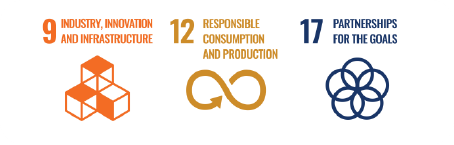
- For transparency and accountability, as well as to identify areas of opportunity for improvement, better manage risks and opportunities, and facilitate alignment with regulations, medmix discloses information publicly to obtain impartial feedback on our performance.
medmix CDP Climate Change “C” rating by 2025.
medmix performance assessed through EcoVadis, with a commitment to continual improvement. - To increase the sales volumes of sustainable, bio-circular and recycled products, medmix develops innovative solutions for our customers that meet their needs while respecting the environment and people.
Increase sales of sustainable products, making 15 available during 2025.
Key activities
In a reflection of the effectiveness of our activities and the results achieved, TIME Magazine and Statista, a data and research firm, included medmix in their second annual ranking of the World’s Best Companies in Sustainable Growth. Our company was described as an industry leader for demonstrating both outstanding financial and environmental performance, characterized by a small carbon footprint, low water consumption and waste production rates, and high usage of low-carbon and renewable energy.
To achieve progress through the established measures, the following key activities were undertaken during 2025, and their effectiveness was determined against the key performance indicators set out in the Main performance indicators section.
Material issues | Pillars | Key activities | Effectiveness | |||
|---|---|---|---|---|---|---|
People | ||||||
Human rights | • Child & forced labor • Modern slavery & human trafficking | • Simplification of due diligence process and review performed for medmix and the supply chain • Human rights risks integrated into risk management • Signed the UK Modern Slavery Act statement • Benchmarked to living wage and confirmed commitment to close any gaps due to evolving standards by 2030 | • In line with the requirement under the Swiss Code of Obligations to undertake due diligence into any reasonable suspicion of child labor within medmix and the supply chain and into the importation and use of conflict minerals, medmix simplified the established internal investigative and assessment processes, and performed thorough reviews into these topics. No cases of suspected child labor were identified, and no conflict minerals or metals were purchased. • Human rights assessed through Enterprise Risk Management, and mitigation actions established. • UK Modern Slavery Act statement published on medmix website. • medmix employee salaries benchmarked to WageIndicator. On track for 2030, having closed one gap during 2025. | |||
• Support local communities | • Development of social initiatives in the group’s main markets • Volunteering by employees in local initiatives with social impact | • 59 site-led projects, benefiting biodiversity, homeless and underprivileged people, diversity and inclusion projects, and youth and other local and worthy causes. | ||||
Safety, health & wellbeing | • Enable learning & employee engagement | • Host Learning Lab sessions • Provide virtual learning platform | • 1’998 employees invited on average to join Learning Lab sessions, an 11% increase compared with 2024 (1’800 employees). • 100 employees onboarded to virtual learning platform, consistent with the previous year. | |||
• Promote a safe and inclusive workplace | • Signatory to the UN Women’s Empowerment Principles • ISO 45001 certification of manufacturing sites • Environment, health & safety walks and observations in all sites, with cascading of walks to supervisors and other functions | • Completed UN Global Compact Communication of Progress, making results public to increase credibility and recognition. • All relevant manufacturing sites successfully passed the ISO 45001 audits during 2025 (one site, Elgin, is awaiting its certificate). • 3´227 walks and observations were made, 18.1% more than the previous year (2´733). Regrettably, this did not prevent an increase in the Recordable Injury Frequency, Lost Time Injury Frequency and Severity rates. | ||||
Planet | ||||||
Climate change | • Reduce global CO2e footprint | • CDP Climate Change Assessment • ISO 14001 certification • ISO 50001 certification • Use low-carbon electricity in all sites by 2025 • Identify all risks related to climate change through the Enterprise Risk Management process • Review climate scenario analysis to determine the resilience of medmix and the sustainability strategy to climate change impact | medmix exceeded our 2025 commitment of reducing our own1 CO2e emissions by 30% compared with a 2019 baseline, achieving a reduction of 60%. 12’132 tonnes of CO2e were emitted in 2025, a reduction of 21% compared with the previous year. • 2025 CDP Climate Change assessment was submitted, and medmix received a "B" score, demonstrating our good management and addressing of impacts through implemented action plans. medmix will aim to return to "A" during 2026. • All relevant manufacturing sites successfully passed the ISO 14001 and ISO 50001 audits during 2025 (one site, Elgin, is awaiting its certificates). • All relevant sites used renewable or low-carbon electricity in 2025. • All climate change-related risks were identified during the annual Enterprise Risk Management process. • The climate scenario analysis was reviewed, identifying risks and opportunities across various timeframes and scenarios. It demonstrated resilience to climate issues. | |||
• Water stewardship | • CDP Water Security Assessment • Equipment upgrades to increase water efficiency • WASH assessment of manufacturing sites • Review water scarcity scenario analysis to determine the resilience of medmix and the sustainability strategy to climate change and usage impact | • 2025 CDP Water Security assessment was submitted, and medmix received a "B" score, demonstrating our good management and addressing of impacts through implemented action plans. medmix will aim to return to "A" during 2026. • 538’590 m3 of water was withdrawn during 2025, an increase of 1% compared with 2024, mostly due to recharging fire control systems. • All relevant sites were assessed, achieving medmix’ commitment. The average WASH result was 99%. • The water scarcity scenario analysis was reviewed, identifying risks and opportunities across various timeframes and scenarios. It demonstrated resilience to climate and usage impact issues. | ||||
Sourcing & circularity | • Increase sales of sustainable1 products | • Use of recycled and bio-based resins • Deployment of medmix Eco-design Principles • Divert waste from landfill | • 15 sustainable2 products were launched during 2025, achieving the target. Within Beauty, 16.4% of GEKA GmbH sales met the definition, vs. 9.9% in 2024. • Eco-design principles were deployed across business units. Effectiveness will be further improved during 2026 by updating the principles to reflect EU Packaging and Packaging Waste Regulation requirements. • medmix achieved a landfill diversion rate of 93% in 2025. All sites achieved Zero Waste to Landfill according to UL Environmental Claim Validation Procedure 2799 Silver Threshold, with the exception of Bangalore, which achieved a diversion rate of 88% due to limitations in local recycling infrastructure. | |||
Profit | ||||||
Compliance & integrity | • Combatting corruption and ethical issues | • eLearning for our Business Code of Conduct, providing training on human rights and how to identify and report human rights abuses • Independent mechanism to enable our employees and external parties to report human rights and corruption abuses, followed by an investigation process | • 1’998 employees were invited to participate in the eLearning, an 11% increase compared with 2024 (1’800 employees). • Following investigations, seven whistleblower reports were substantiated and actions defined. | |||
Product safety | • Ensure quality of products | • Continue product risk management and surveillance mechanism within certified Quality Management Systems in the medmix legal entity • For products where medmix acts as the legal manufacturer, obtain approval for the applicable processes/products from the designated agencies and authorities | • Each manufacturing site certified (ISO 9001 for Consumer and Industrial and ISO 13845 for Healthcare). • All relevant certifications, approvals and declarations obtained to act as legal manufacturer. • Two precautionary reportable safety incidents occurred in 2025, neither resulting in any serious nor lasting deterioration of a patient’s health. No product recalls were performed. |
1)Scope 1, 2 and partial 3 emissions (upstream categories 3 and 6).
2)Minimum 30% reduction in CO2e cradle-to-gate compared with standard product.
Description of risks
At medmix, environmental, social and governance (ESG) risks, including sustainability, are assessed regularly and managed as part of the company’s integrated Enterprise Risk Management (ERM) process. This holistic approach ensures that climate-related and other sustainability risks are integrated into the broader organizational risk framework. The Global Sustainability Lead, who reports to the Chief Human Resources and Sustainability Officer (CHRO), is responsible for managing climate-related and other sustainability risks and opportunities. The Global Sustainability Lead provides regular updates to the CHRO as a member of the Executive Committee and, in collaboration with the Chief Compliance Officer, ensures that sustainability risks are incorporated into the annual ERM review. This governance structure ensures operational oversight and accountability for ESG-related risks and opportunities at medmix. The Executive Committee encourages a strong organizational culture and awareness of risk to ensure that the organization can overcome the factors that inhibit effective risk management.
ESG and sustainability risks have been identified through a structured survey process involving internal and external stakeholders. Based on this, medmix has identified 14 material topics, which address environmental, social, and governance (ESG) risks and opportunities, reinforcing medmix’ commitment to responsible and sustainable business practices. The topics are linked to the ERM risk registry, allowing for seamless integration into the broader risk management framework. Risks are assessed based on their potential financial, reputational, operational and social impact on the company and society, and are duly considered in company financial planning.
The annual ERM process provides a platform for identifying, categorizing and prioritizing climate-related risks and opportunities. While mitigation measures are defined during the annual ERM cycle, medmix’ existing management framework supports proactive risk mitigation and adaptation efforts. Measures include:
- Physical risks: monitoring the potential impacts of extreme weather events on operational facilities and ensuring resilience through business continuity planning.
- Transition risks: evaluating changes in regulatory landscapes and market demands, with a focus on maintaining compliance and adapting product portfolios to emerging sustainability trends.
To track progress, medmix monitors specific sustainability key performance indicators (KPIs) associated with its material topics. Progress against these KPIs is regularly reviewed as part of the ERM process. This ensures that climate-related risks and opportunities remain aligned with the company’s strategic objectives and operational priorities.
In addition to managing risks, medmix actively identifies opportunities linked to its material topics. These include potential advances in sustainable product development, improvements in operational efficiency through energy reduction initiatives and enhancements of supply chain resilience.
The following chart outlines the company’s material issues, along with the significant risks identified through the company’s Enterprise Risk Management process, and key activities to mitigate their impact. The significance and relevance of the risks have been determined based on their potential financial, legal, reputational and social impacts:
Material issue | Associated significant risks | Key activities | ||
Climate change | Factory disruptions from extreme weather, impacting operations, finances and reputation | Monitoring climate impacts; implementing business continuity plans; developing site-specific adaptation measures | ||
Sourcing & circularity | Delays or inability to source raw materials or transport goods, impacting growth and operations | Strengthening global procurement systems; regionalizing inventory; monitoring global supply chain risks | ||
Safety, health & wellbeing | Environmental or site hazard, occupational accidents, site safety concerns | Local emergency response & business continuity plans; on-site visits/inspections; incident analysis; monitoring tool | ||
Product safety | Regulations restricting disposable products, requiring portfolio adaptations | Monitoring regulatory changes; adapting product R&D to meet evolving standards | ||
Compliance & business integrity | Non-compliance or unethical behavior leading to reputational damage and liability | Implementing robust compliance measures; conducting regular audits and inspections; providing comprehensive training | ||
Human rights | Risks of labor rights violations, including child labor in the supply chain | Ensuring zero tolerance through supplier agreements; providing training on identifying risks; monitoring via hotline |